A little prep before the truck arrives makes a container last longer and keeps the doors working. Here's what matters, in order.
1. Pick the spot
- Somewhere the truck can reach in a straight line, with room overhead. See how delivery works.
- High ground that drains, not a low spot where water collects.
- Room at the door end to swing both doors fully open (about 8 ft) and to walk in.
- Clear of septic tanks, drain fields, buried lines and tree roots you care about.
- Within any setback or placement rules your city, county or HOA sets. Check before delivery.
2. Give it a solid base
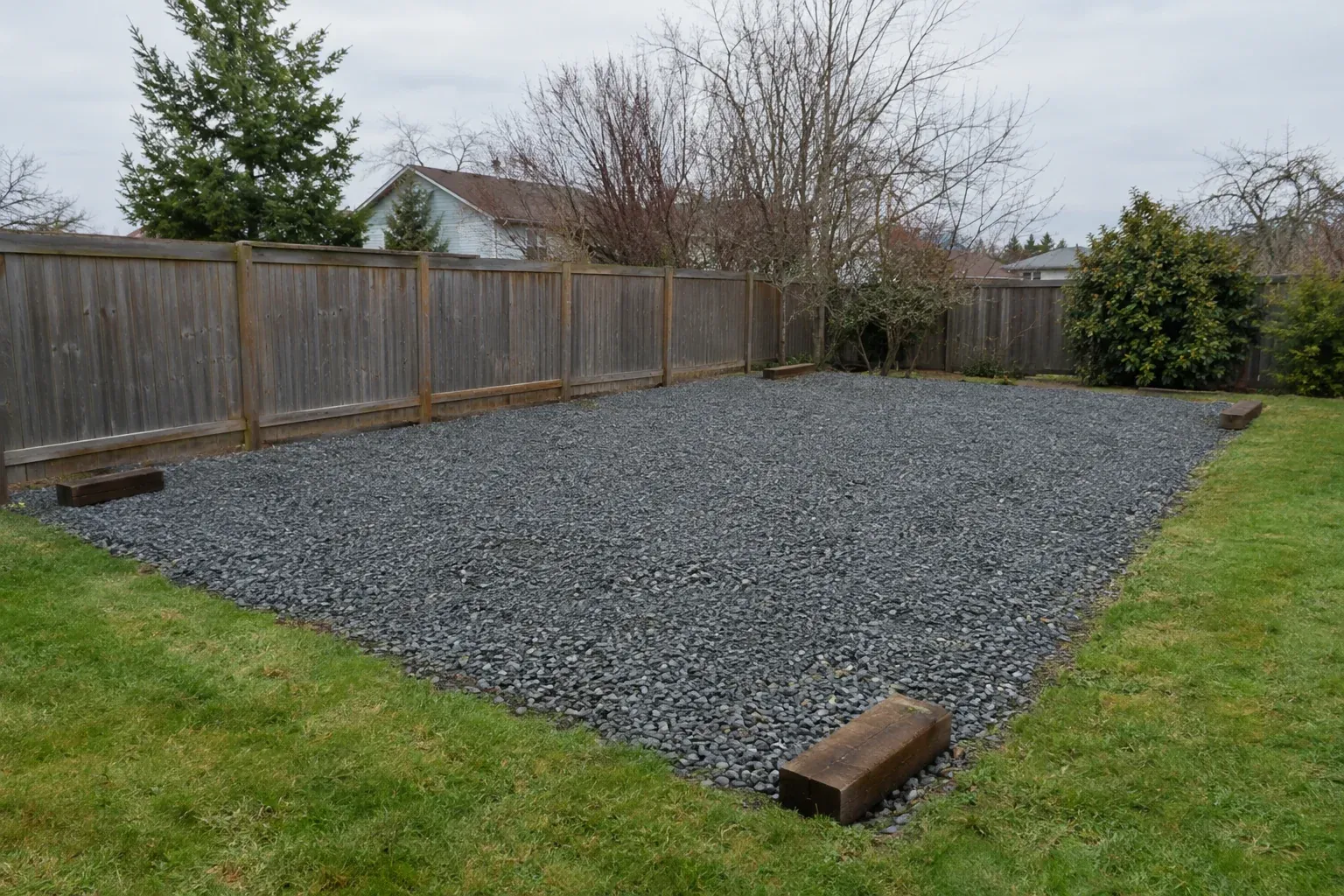
A container rests on four steel corner castings. The goal is firm, level support at those corners and keeping the floor out of standing water.
| Base | Good for | Notes |
|---|---|---|
| Compacted gravel pad | Most sites | Drains well and spreads the load. A few inches of compacted crushed stone, a little larger than the container's footprint. |
| Railroad ties or treated timbers | Farms, yards, quick setups | Lay them across the ends (and the middle on a 40ft) on firm ground. |
| Concrete blocks or piers | Uneven ground | Solid blocks under each corner, shimmed level. Keeps air moving underneath. |
| Concrete slab or asphalt | Existing hard surfaces | Great if it's already there and thick enough. Thin or old paving can crack under the corners. |
3. Get it level
A twisted container is the main reason doors won't close. Use a long level or a string line across your pad or blocks before delivery. A slight fall toward the doors is fine and helps water run off the roof.
4. Clear the path
Move vehicles, trailers and anything along the route. Trim low branches. Mark the four corners of the drop spot with stakes or paint so the driver knows exactly where you want it.
5. Think about after delivery
- Condensation: steel sweats when temperatures swing. Vents and moisture absorbers help, especially in humid climates.
- Security: a good padlock, ideally inside a welded lock box.
- Anchoring: in storm-prone areas, ground anchors or tie-downs are common, and some local rules require them.